Introduction: A Digital Lifeline for Struggling Economies
Imagine living in a country where your monthly salary loses half its value before you can spend it. Moreover, government officials siphon off public funds with impunity. Meanwhile, opening a bank account requires connections you don’t have.
This isn’t a dystopian future—it’s daily reality for billions in developing nations. However, cryptocurrency poor countries are discovering could be the financial revolution they desperately need.
According to Chainalysis’s 2024 Global Crypto Adoption Index, developing nations now lead the world in cryptocurrency adoption rates. Specifically, what if cryptocurrency—the technology behind Bitcoin and Ethereum—could actually help poor countries break free from corruption, hyperinflation, and economic control?
Let’s explore how digital currencies could reshape economies in struggling nations, using Venezuela as our primary case study. For more context on blockchain technology fundamentals, understanding the underlying technology helps explain why cryptocurrency offers unique solutions for developing economies.
Cryptocurrency Poor Countries: The Corruption Problem
Money Disappears Before It Helps Anyone
In many developing nations, corruption isn’t just a problem—it’s the system. According to World Bank estimates, corruption costs developing countries between $1.26 trillion to $2.58 trillion annually. As a result, that’s roughly 2-5% of global GDP vanishing into private pockets instead of building schools, hospitals, or infrastructure.
How Traditional Systems Enable Corruption
The current financial infrastructure in poor countries creates perfect conditions for corruption to thrive. Specifically, several key factors work together to facilitate this problem:
Centralized Control Creates Accountability Gaps
When one government or central bank controls all money flow, there’s no meaningful accountability. Consequently, officials can print money, manipulate exchange rates, or simply redirect funds without transparent oversight. Furthermore, this concentration of power means citizens have no recourse when funds disappear.
Opaque Transactions Hide the Truth
Cash-based economies and closed banking systems make it nearly impossible to trace where money actually goes. For instance, a road construction budget might show $10 million spent, but only $2 million of actual work gets done. The rest? It simply disappeared without a trace.
Limited Access Excludes the Majority
In many poor countries, 50-70% of the population has no bank account. Therefore, this forces people to use cash, making them vulnerable to theft, inflation, and having zero financial history for loans or credit. Additionally, without banking access, citizens can’t participate fully in the economy or build financial security.
Currency Manipulation Destroys Savings
Governments can devalue currency overnight, destroying savings instantly. Moreover, they can impose capital controls, preventing citizens from protecting their wealth or accessing international markets. As a result, people watch their life’s work evaporate due to political decisions.
How Cryptocurrency Transforms Poor Countries’ Economies
Transparency That Can’t Be Faked
Blockchain technology—the foundation of cryptocurrency—creates a permanent, public record of every transaction. Once something is recorded, it cannot be changed or deleted. Learn more about how blockchain works in our detailed guide.
Imagine if every government contract, every budget allocation, every payment was recorded on a public blockchain. In that case, citizens could see exactly where money flows. Furthermore, investigators could trace corruption in real-time instead of discovering it years later when the damage is done.
Financial Access for Everyone
You don’t need a bank account, credit history, or government permission to use cryptocurrency. Instead, you just need a smartphone and internet connection.
In poor countries where banking infrastructure is limited or corrupt, this is revolutionary. For example, a farmer in rural Africa can receive payment for crops directly from an international buyer. Similarly, a freelancer in Venezuela can earn dollars online and keep them without government seizure. Meanwhile, a refugee can carry their wealth across borders without risking cash confiscation.
Protection Against Hyperinflation
When governments print money irresponsibly, citizens suffer. However, with cryptocurrency, no central authority can just print more Bitcoin or inflate supply at will.
For people watching their life savings evaporate due to government mismanagement, stable cryptocurrencies or even Bitcoin (despite volatility) can be safer than holding their national currency. Consequently, many turn to digital assets as a store of value.
Reduced Government Control
This is controversial but critical: cryptocurrency gives people financial sovereignty. Specifically, governments can’t freeze your Bitcoin wallet because they don’t like your politics. Additionally, they can’t prevent you from receiving money from abroad. Moreover, they can’t force you to accept a devalued currency.
For citizens in authoritarian or corrupt regimes, this represents genuine economic freedom. Therefore, it’s no surprise that crypto adoption grows fastest in countries with the worst financial systems.
Cryptocurrency Poor Countries Case Study: Venezuela
The Current Nightmare
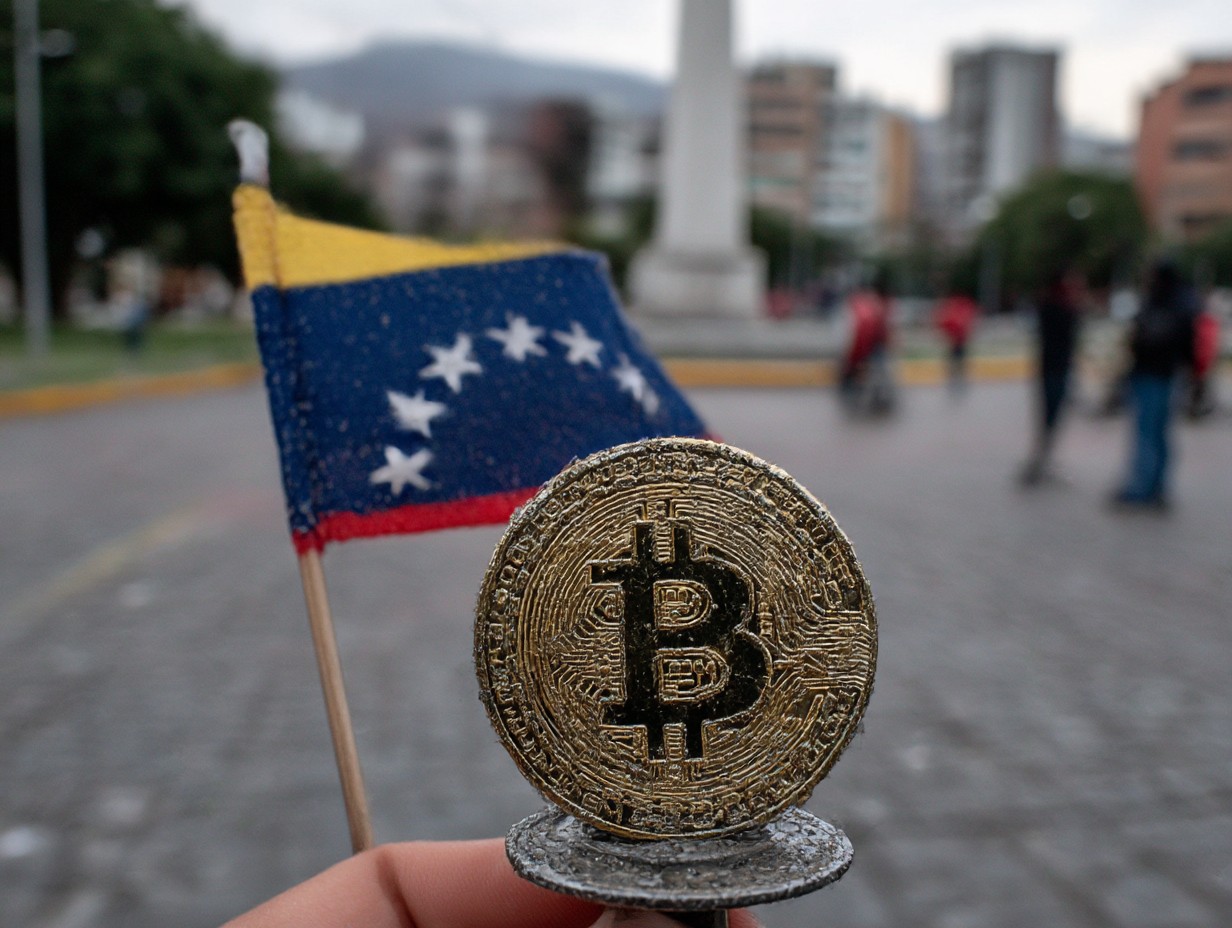
Venezuela offers perhaps the clearest example of how cryptocurrency poor countries’ citizens use to survive when traditional financial systems completely collapse. For more on Venezuela’s crypto revolution, our detailed analysis shows how desperate citizens turned to digital currency.
Hyperinflation Destroys Value Daily
At its peak, Venezuela’s inflation reached 1,700,000% annually. To put this in perspective, a cup of coffee that cost 450 bolívars in 2016 cost 1 million bolívars by 2018. Consequently, people’s entire life savings became worthless within months.
Currency Collapse Makes Money Meaningless
The bolívar lost virtually all value. As a result, people measure money by weight, not by denomination. Furthermore, salary became worthless hours after being paid, forcing workers to rush immediately to exchange money for goods or foreign currency.
Capital Controls Trap Citizens
The government restricts access to foreign currency, forcing citizens to use the failing bolívar or resort to black markets at punishing exchange rates. Therefore, anyone trying to protect their wealth faces criminal penalties.
Widespread Corruption Steals the Nation’s Wealth
Venezuela ranks 177 out of 180 countries in Transparency International’s Corruption Perceptions Index. Moreover, oil revenues—the nation’s primary wealth—have been systematically stolen rather than invested in the people.
Crypto Adoption Already Happening
Venezuela already has one of the highest cryptocurrency adoption rates globally, according to Chainalysis research. However, this isn’t because of government policy, but despite it. Instead, desperate citizens turned to Bitcoin, Dash, and stablecoins to survive. For insights on how to start using cryptocurrency, our beginner’s guide explains the basics.
Current usage includes:
- Remittances from relatives abroad arriving via crypto to avoid government seizure
- Merchants accepting Bitcoin and USDT to preserve value
- Freelancers earning cryptocurrency to avoid bolívar devaluation
- Peer-to-peer exchanges operating outside government control
What If Venezuela Fully Implemented Cryptocurrency?
Let’s imagine Venezuela made a bold move: officially adopting cryptocurrency as legal tender alongside or replacing the bolívar. What would happen?
Immediate Benefits Citizens Would Experience
1. Inflation Protection Becomes Reality
Using Bitcoin or dollar-pegged stablecoins like USDT or USDC would immediately protect citizens from hyperinflation. As a result, your salary would hold value. Furthermore, savings wouldn’t evaporate overnight. Consequently, economic planning becomes possible again for the first time in years.
2. Access to Global Economy Opens Up
Venezuelans could transact internationally without government permission or bank intermediaries. For instance, freelancers could work for foreign clients and keep earnings safe. Similarly, businesses could import goods without navigating corrupt currency exchange systems. Therefore, international trade becomes accessible to everyone, not just the connected elite.
3. Remittance Revolution Saves Families
Millions of Venezuelans fled the country. Those abroad send money home, but traditional remittance services take 5-10% fees and require government-approved banks. In contrast, cryptocurrency remittances cost pennies and arrive in minutes, putting more money in families’ hands. Consequently, the money that actually reaches families could increase by 10-15%.
4. Transparent Government Spending Reduces Theft
If government budgets and expenditures were recorded on public blockchains, corruption would be far harder. Specifically, citizens could see exactly where oil revenues go. Additionally, international auditors could track aid money in real-time. As a result, the billions currently stolen annually would be much harder to hide.
5. Financial Inclusion Becomes Universal
The 60% of Venezuelans without bank accounts could participate in the economy through cryptocurrency wallets. Moreover, mobile phone penetration is high—crypto wallets don’t require banks or credit scores. Therefore, millions of excluded citizens could suddenly access financial services.
Realistic Challenges Venezuela Would Face
Let’s be honest—cryptocurrency isn’t a magic solution. Venezuela would face serious hurdles:
Internet and Electricity Dependency
Venezuela’s infrastructure is crumbling. Unfortunately, crypto requires reliable internet and power. During blackouts, transactions become impossible. Therefore, infrastructure investment must happen alongside crypto adoption.
Technical Knowledge Gap
Most Venezuelans aren’t tech-savvy yet. Wallet security, private key management, and avoiding scams require education that doesn’t exist. Consequently, without training programs, many people could lose funds to theft or mistakes.
Volatility Risk Remains Real
Bitcoin’s price swings wildly. For someone earning $50 monthly, a 20% Bitcoin drop in one day could be devastating. However, stablecoins help, but they have their own risks. Therefore, education about which cryptocurrencies to use for which purposes becomes critical.
Government Resistance Is Guaranteed
Why would a corrupt government voluntarily adopt a system that makes corruption harder? They wouldn’t. Instead, real crypto adoption would likely require regime change or overwhelming grassroots pressure. Consequently, the path to official adoption remains politically complex.
Criminal Activity Concerns
Cryptocurrency’s pseudonymity can facilitate money laundering and illegal transactions. Therefore, Venezuela would need regulatory frameworks to prevent criminal abuse while preserving citizen financial freedom.
Would Crypto Make Venezuelan Lives Better?
The Honest Answer: Yes, But It’s Complicated
If Venezuela genuinely adopted cryptocurrency as part of broader economic reforms, citizens would absolutely see improvements. Specifically:
✅ Purchasing Power Protected – End to watching your salary become worthless
✅ Financial Sovereignty – Control over your own money without government interference
✅ Economic Participation – Access to banking services and international markets
✅ Reduced Petty Corruption – Transparent transactions reduce opportunities for small-scale theft
✅ Remittance Access – Families receive more money from relatives abroad
However, cryptocurrency alone won’t fix Venezuela’s problems. Instead, the country needs:
- Political reform and reduction of corruption at the top
- Infrastructure investment (internet, electricity, education)
- Legal frameworks protecting property rights
- International cooperation and potentially debt relief
- Diversification beyond oil dependency
Cryptocurrency is a powerful tool, but tools only work when wielded properly. Therefore, it must be part of a comprehensive reform strategy.
Beyond Venezuela: Cryptocurrency Poor Countries Worldwide
Where Cryptocurrency Could Make the Biggest Impact
African Nations Show Early Promise
Countries like Nigeria, Kenya, and Ghana already show massive crypto adoption, demonstrating how cryptocurrency poor countries across Africa are embracing. Moreover, mobile money systems like M-Pesa proved Africans are ready for digital finance. Consequently, cryptocurrency could leapfrog traditional banking entirely, just as mobile phones leapfrogged landlines. Read our analysis on African crypto adoption trends.
Southeast Asian Economies Are Positioned Perfectly
[Image: Southeast Asian crypto users on mobile devices] Alt text: Cryptocurrency poor countries Southeast Asia adoption showing mobile wallet usage
Nations with large unbanked populations but high mobile penetration (Philippines, Vietnam, Cambodia) could use crypto for remittances, microfinance, and cross-border trade. According to the Asian Development Bank, these cryptocurrency poor countries could benefit most from digital financial inclusion. As a result, they could avoid expensive intermediaries entirely while building financial inclusion.
Post-Conflict Zones Need Alternative Systems
Countries rebuilding after war (Syria, Yemen, Afghanistan) lack functional banking infrastructure. Therefore, cryptocurrency could provide financial services while institutions are rebuilt. Additionally, it offers citizens a way to preserve wealth despite instability.
Small Island Nations Depend on Remittances
Countries like Tonga or El Salvador already experiment with crypto because remittances are lifelines. Furthermore, reducing remittance costs from 10% to under 1% means millions more dollars reaching families. Consequently, these nations could see immediate GDP benefits.
The Counter-Arguments: Why Crypto Might Not Work
Let’s Address the Skepticism Honestly
“Cryptocurrency Is Too Volatile”
True—but it’s less volatile than the Venezuelan bolívar, Turkish lira, or Argentine peso. Moreover, stablecoins pegged to dollars offer stability without government control. Therefore, the volatility argument applies primarily to Bitcoin, not all cryptocurrencies.
“It’s Used for Crime”
So is cash. Actually, cash is used for far more criminal activity than crypto. Furthermore, blockchain’s transparency makes crime easier to trace than traditional banking, where shell companies hide money flows. Consequently, this criticism is largely unfounded.
“Poor People Can’t Use It”
Yet millions already do. Moreover, M-Pesa in Kenya showed that poor, non-technical people can adopt digital finance rapidly when it solves real problems. Additionally, cryptocurrency UX is improving constantly, making it easier every year.
“Governments Will Ban It”
Many have tried. For instance, China banned crypto multiple times—yet usage continues. Similarly, Vietnam, India, and others imposed restrictions—adoption grew anyway. Therefore, when people need something badly enough, they find ways around restrictions.
“It Doesn’t Scale”
This was true five years ago. However, today, Layer 2 solutions, Lightning Network, and newer blockchains handle millions of transactions at pennies per transaction. Furthermore, technology is evolving rapidly to solve scaling challenges.
What Cryptocurrency Poor Countries Need for Success
Real Solutions Require Real Commitment
1. Education Infrastructure Must Come First
Governments and NGOs must invest in cryptocurrency education for these poor countries to succeed. Specifically, people need to understand wallet security, recognize scams, and manage volatility. The IMF has published guidance on digital currency adoption that highlights education as critical. Without this foundation, adoption will lead to losses and disillusionment. For practical guides, check our cryptocurrency security basics.
2. Regulatory Clarity Protects Everyone
Countries need sensible regulations protecting consumers without stifling innovation. For example, El Salvador’s Bitcoin law provides one model for how cryptocurrency poor countries can create legal frameworks—imperfect, but a starting point for others to improve upon. Learn more about crypto regulations worldwide.
3. Infrastructure Investment Is Non-Negotiable
Reliable internet and electricity are essential prerequisites. Unfortunately, cryptocurrency can’t work during constant blackouts. Therefore, infrastructure must come first or alongside crypto adoption, not after.
4. Stablecoin Development Reduces Risk
Volatile cryptocurrencies are too risky for daily use in poor countries. Instead, dollar-pegged stablecoins or even blockchain-based versions of regional currencies could offer stability with transparency. Consequently, these should be the focus for practical adoption.
5. International Cooperation Accelerates Progress
Rich nations and international organizations should support crypto adoption in developing countries rather than fighting it. Moreover, the IMF and World Bank could facilitate rather than oppose these innovations. Therefore, a collaborative approach would benefit everyone.
6. Grassroots Adoption First Works Best
Top-down government mandates don’t work well. Instead, organic adoption driven by real need—like we see in Venezuela now—creates sustainable change. Consequently, policymakers should enable rather than force adoption.
The Bigger Picture: Is Crypto the Answer?
Cryptocurrency Isn’t a Silver Bullet—It’s a Tool
Can cryptocurrency reduce corruption and improve economies in poor countries? Yes, absolutely.
Will it magically solve all problems? No, of course not.
The truth is nuanced: cryptocurrency offers poor countries a genuine opportunity to:
- Reduce corruption through transparency
- Provide financial access to billions without banks
- Protect citizens from hyperinflation and currency manipulation
- Enable participation in the global economy
- Reduce dependence on corrupt institutions
However, technology alone never fixes political or social problems. Instead, cryptocurrency must be part of broader reforms including:
- Democratic governance and rule of law
- Infrastructure development
- Education and technical literacy
- Property rights protection
- International cooperation
Venezuela could absolutely improve with cryptocurrency adoption. In fact, citizens are already using crypto to survive. Moreover, official adoption with proper infrastructure and education would amplify those benefits dramatically.
But crypto won’t fix Venezuela’s corruption, authoritarianism, or oil dependency. Instead, it would give citizens tools to protect themselves while larger reforms happen—and that’s valuable in itself.
Cryptocurrency Poor Countries’ Path Forward
[Image: Hope and future vision showing crypto enabling financial freedom] Alt text: Cryptocurrency poor countries future showing digital financial inclusion and economic freedom
For people in poor, corrupt countries, cryptocurrency represents something powerful: choice.
Specifically, it provides:
The choice to protect your wealth from government mismanagement.
Participate in the global economy despite local restrictions.
To see where public money actually goes.
The control your own financial future.
Moreover, these choices won’t eliminate poverty overnight. They won’t instantly end corruption. However, they shift power—even slightly—from corrupt institutions toward individual citizens. For related reading, explore our article on financial freedom through cryptocurrency.
And sometimes, that shift is where real change begins.
For Venezuela and other cryptocurrency poor countries, digital currency could be the difference between economic survival and continued suffering. Similarly, for millions in other poor countries, it could be the bridge from exclusion to participation. According to the United Nations, financial inclusion is critical for sustainable development.
The technology exists. Furthermore, the use cases are proven. Therefore, the question isn’t whether cryptocurrency can help poor countries—it’s whether we’ll support adoption or fight it.
The future of money might just save the people who need it most.
For more insights on cryptocurrency’s impact on developing economies, explore our comprehensive crypto adoption series and stay updated with the latest blockchain news.